Sri Vidya Sadhana
The Sacred Wisdom of Bhagwati Tripurasundari
Sri Vidya is a revered spiritual tradition centred on Bhagwati Tripurasundari and the worship, contemplation, and symbolism of the Sri Chakra.
Its teachings bring together mantra, meditation, ritual worship, sacred geometry, and inner contemplation. Different lineages preserve different approaches to Sri Chakra Upasana and its interpretation.
What Is Sri Vidya?
A spiritual tradition devoted to the Divine Mother and the contemplation of the Sri Chakra.
Sri Vidya is traditionally regarded as a profound path of spiritual knowledge, devotion, and inner contemplation. Its central deity is Bhagwati Tripurasundari, also known in the tradition through names associated with Lalita Mahatripurasundari.
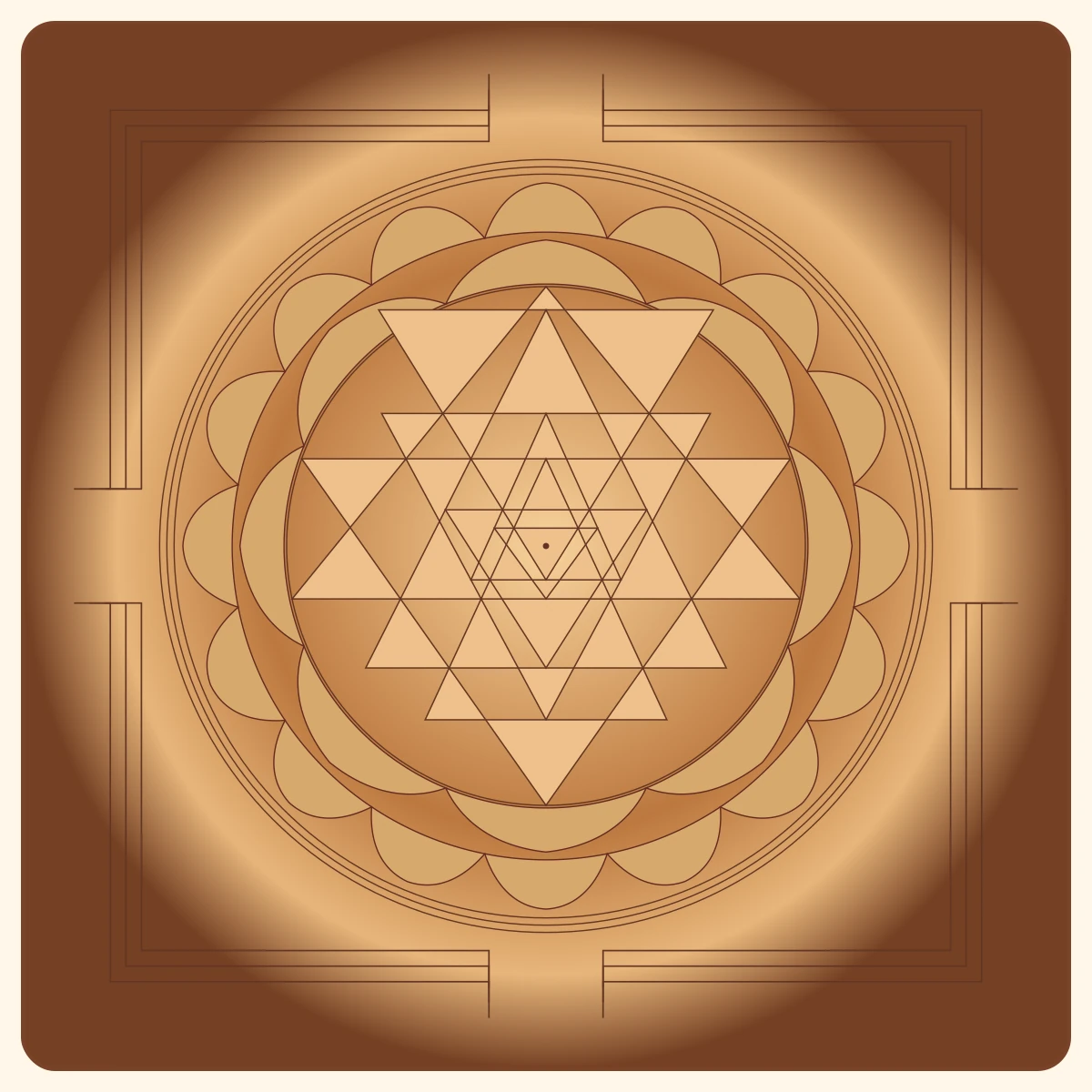
The Sri Chakra, also called the Sri Yantra, is central to many Sri Vidya practices. It is understood in the tradition as a sacred geometric representation of the Divine Mother and of the relationship between the individual and the wider cosmos.
Sri Vidya practice is preserved through different approaches and lineages, including Kaulachara, Vedachara, Samayachara, and other systems described in traditional teachings.
Bhagwati Tripurasundari
The central Divine Mother of the Sri Vidya tradition.
Sri Chakra
A sacred geometric focus for worship and contemplation.
Mantra & Meditation
Disciplined practices taught according to the relevant tradition and level of preparation.
Three Approaches to Sri Vidya Upasana
Your supplied study notes describe three broad approaches to the practice of Sri Vidya.
Antranga Upasana
Inner contemplation and meditation. In this approach, the practitioner contemplates the body as related to the Sri Chakra and focuses on inward worship rather than external ritual arrangements.
Inner ContemplationBahiranga Upasana
External worship centred on the Sri Chakra, using traditional ritual materials and forms of worship. Havan and other ritual practices may form part of specific approaches.
Ritual WorshipMishrita Upasana
A combined approach that brings external worship together with inner contemplation, meditation, and practices prescribed by the relevant lineage.
Integrated PracticeAdvanced mantra, initiation, and ritual instructions should be learned from an appropriately qualified teacher within the relevant tradition.
Sri Chakra: A Symbol of the Universe
The Sri Chakra is composed of nine interlocking triangles: four traditionally associated with Shiva and five with Shakti. Their intersections form a pattern of smaller triangles around the central bindu.
In Sri Vidya, the bindu is contemplated as the central point of the diagram. The surrounding enclosures are associated with layers of worship and contemplation. A lotus and the outer boundary are also important parts of many representations.
Interpretations of the enclosures, their deities, mantras, and correspondences should be presented according to the specific lineage being taught.
Explore the Nine Avaranas →
Sri Chakra, the Cosmos, and the Body
The supplied notes describe symbolic relationships between the Sri Chakra, the traditional worlds (Lokas), and different parts of the body.
Sri Chakra and the Lokas
| Sri Chakra Element | Loka in the Supplied Notes |
|---|---|
| Bindu Chakra | Satya Loka |
| Trikona / Triangle | Tapah Loka |
| Ashtakona / Eight-triangle form | Jana Loka |
| Antardashara | Maha Loka |
| Bahirdashara | Svah Loka |
| Chaturdashara | Bhuvah Loka |
| First Vrit / Circle | Bhu Loka |
| Ashtadala / Eight-petal lotus | Atala Loka |
| Outer Ashtadala | Vital Loka |
| Shodashadala / Sixteen-petal lotus | Sutala Loka |
| Vrittraya / Three circles | Talatala Loka |
| Bhupura — first line | Mahatala Loka |
| Bhupura — second line | Rasatala Loka |
| Bhupura — third line | Patala Loka |
Sri Chakra and the Body
| Sri Chakra Element | Body Reference in the Supplied Notes |
|---|---|
| Bindu | Brahmarandhra |
| Trikona / Triangle | Head |
| Ashtakona | Forehead |
| Antardashara | Third eye |
| Bahirdashara | Neck |
| Antardashara (second reference in notes) | Heart |
| Vrit / Circle | Shoulder |
| Ashtadala | Navel |
| Outer Ashtadala | Stomach |
| Shodashadala | Swadhisthana Chakra |
| Bahistrivrit | Muladhara Chakra |
| Bhupura — first line | Knee (Janu) |
| Bhupura — second line | Thigh |
| Bhupura — third line | Legs |
Sri Chakra and the Body Chakras
| Element in the Supplied Notes | Body Chakra |
|---|---|
| Trikona / Triangle | Muladhara |
| Ashtakona / Eight-petal reference | Swadhisthana |
| First Dashara | Manipura |
| Second Dashara | Anahata |
| Chaturdashara | Vishuddha |
| Ashtakona + Shodashakona | Ajna |
Sri Vidya and Kundalini
In the supplied Sri Vidya notes, Kundalini Shakti is identified with the Divine Mother. Kundalini is described symbolically as a subtle, concentrated form of Shakti, traditionally associated with the Muladhara region.
The journey of Kundalini is described in yogic traditions as an ascent through the chakras towards the Sahasrara, where the symbolism of Shakti and Shiva expresses spiritual union and expanded awareness.
These descriptions belong to traditional spiritual frameworks. They should not be taken as medical or anatomical statements.
Explore Sri Vidya Learning →
The Nine Avaranas of Sri Chakra
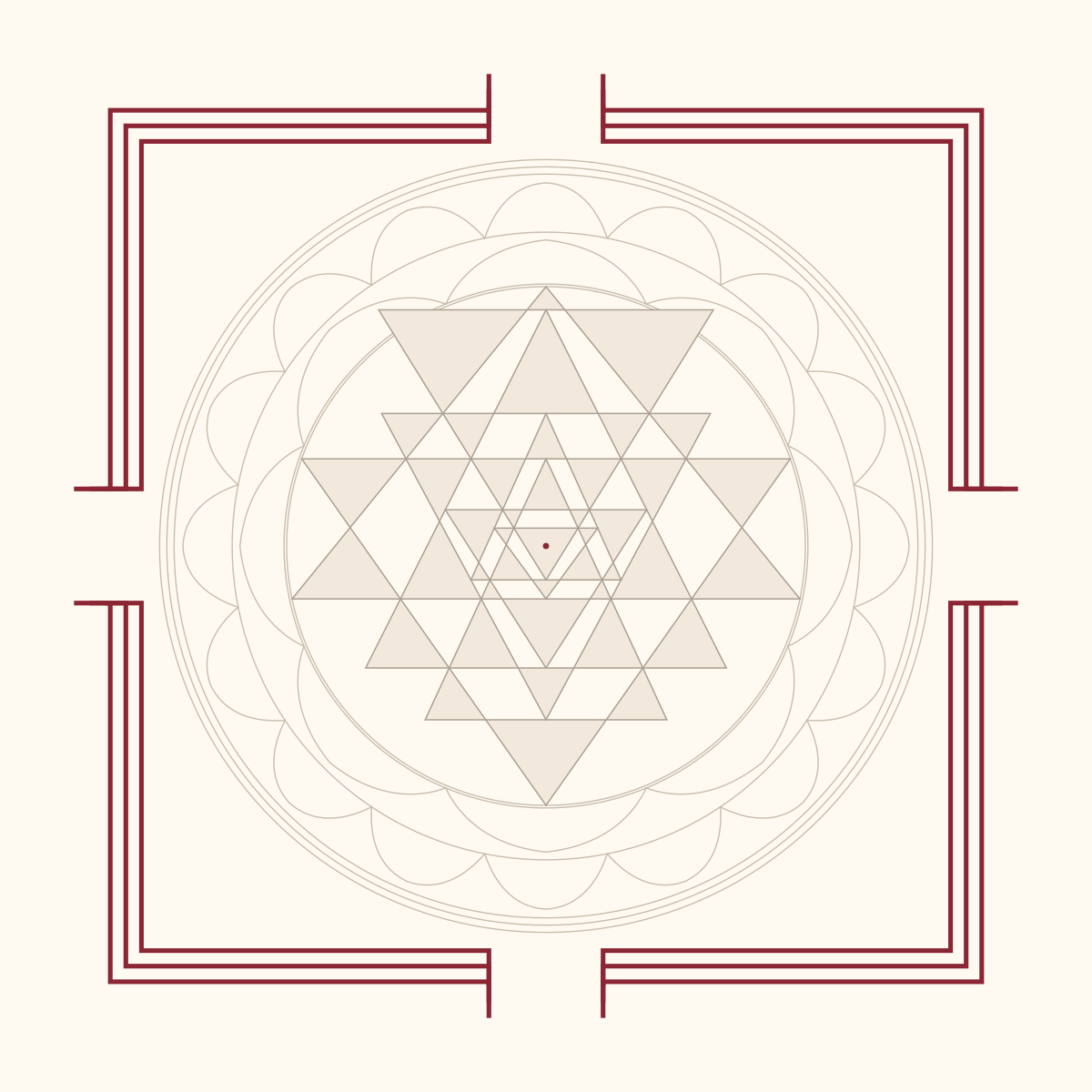
The nine Avaranas are traditionally studied as successive layers of the Sri Chakra, each associated with a name, symbolic meaning, and a particular aspect of worship.
Trailokya Mohana Chakra
The Enchanter of the Three Worlds. In the supplied notes, this enclosure is presented as the outer approach to Sri Chakra worship.
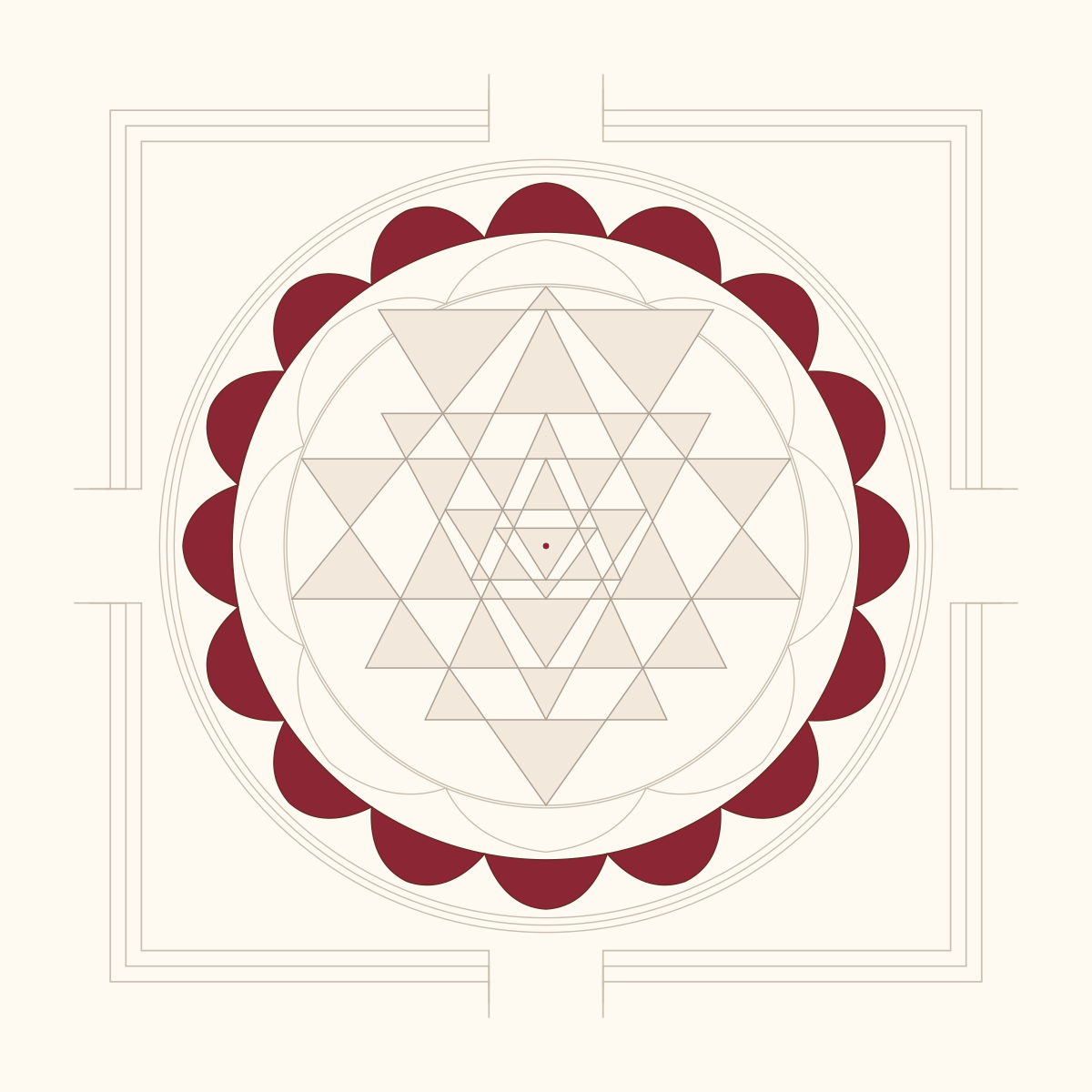
Sarvasha Paripuraka Chakra
The Fulfiller of Aspirations. The supplied notes associate this enclosure with the symbolism of desires and their contemplation.
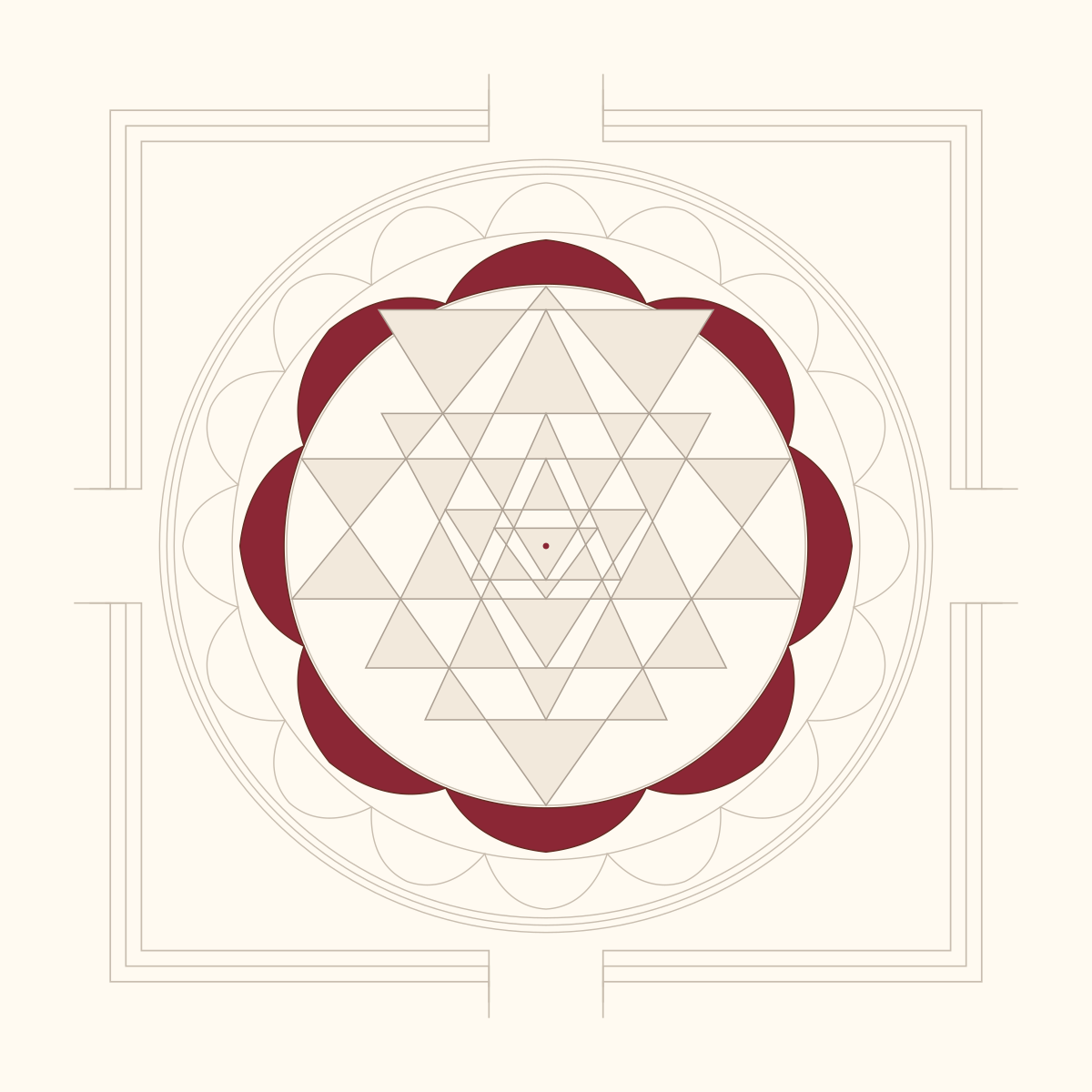
Sarva Sankshobhana Chakra
The Agitator of All. Traditionally interpreted through the stirring and awakening of inner energies and awareness.
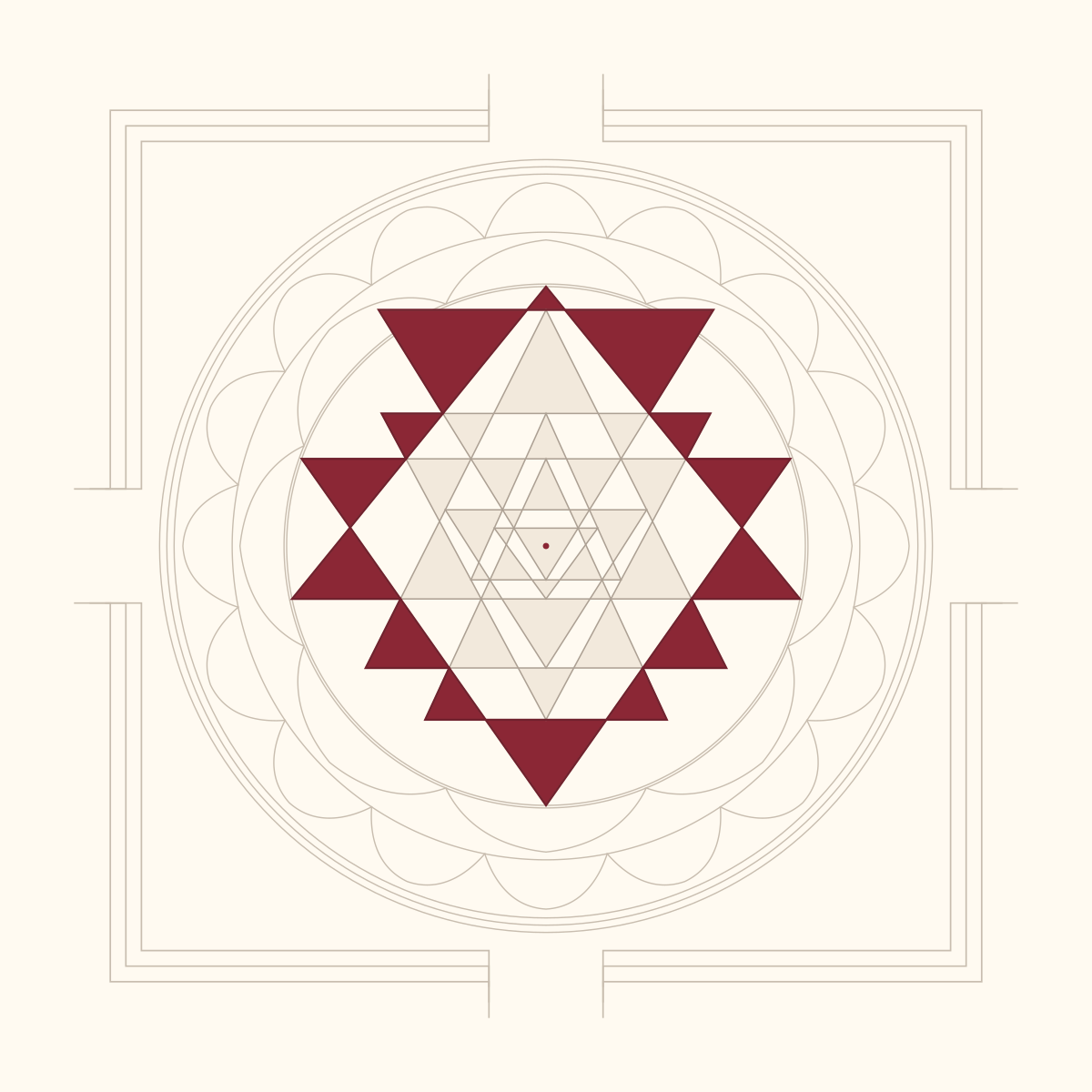
Sarva Saubhagyadayaka Chakra
The Bestower of Auspiciousness. Associated in the supplied notes with well-being, auspiciousness, and spiritual contemplation.
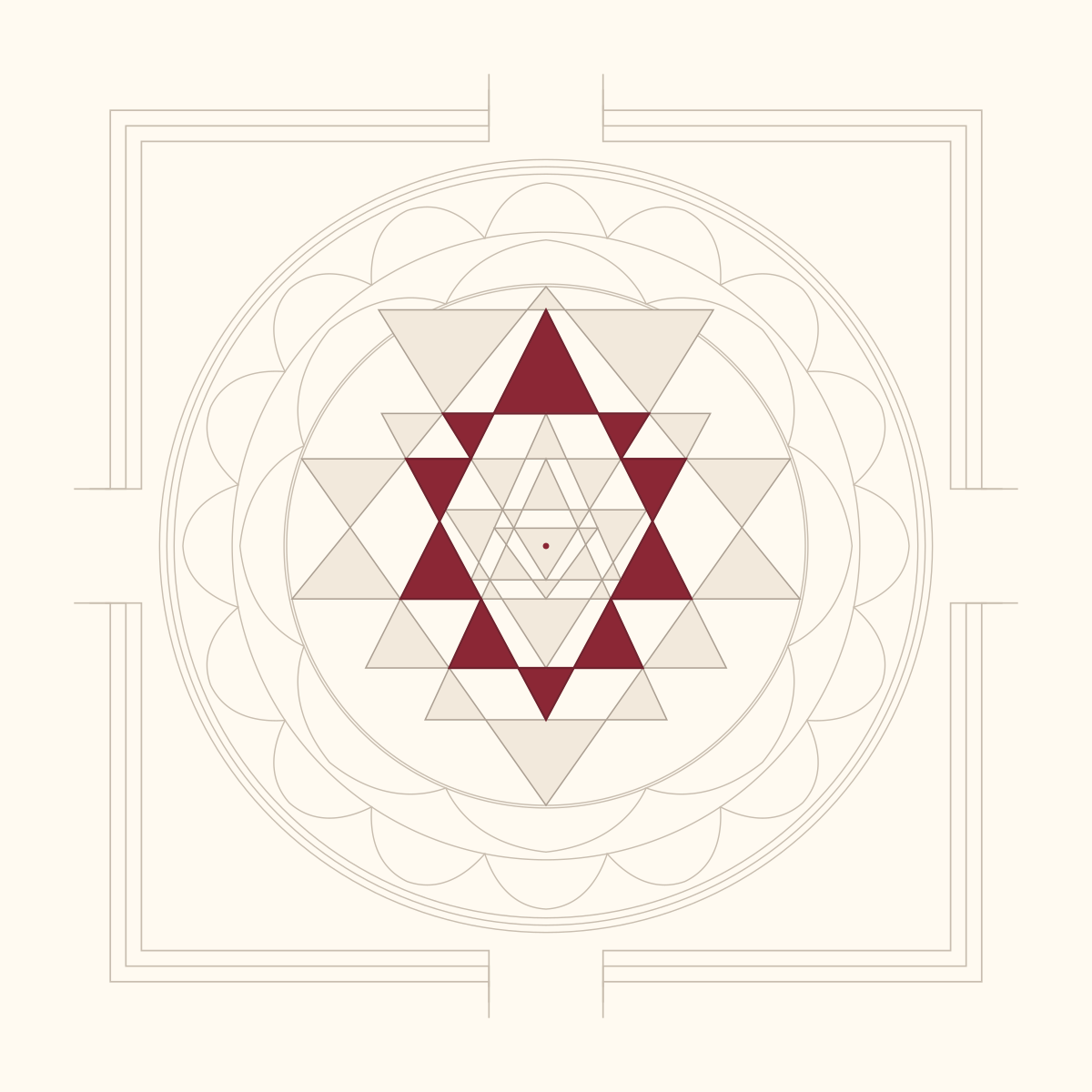
Sarvartha Sadhaka Chakra
The Accomplisher of Aims. Represents the spiritual contemplation of purpose, intention, and the fulfilment of goals.
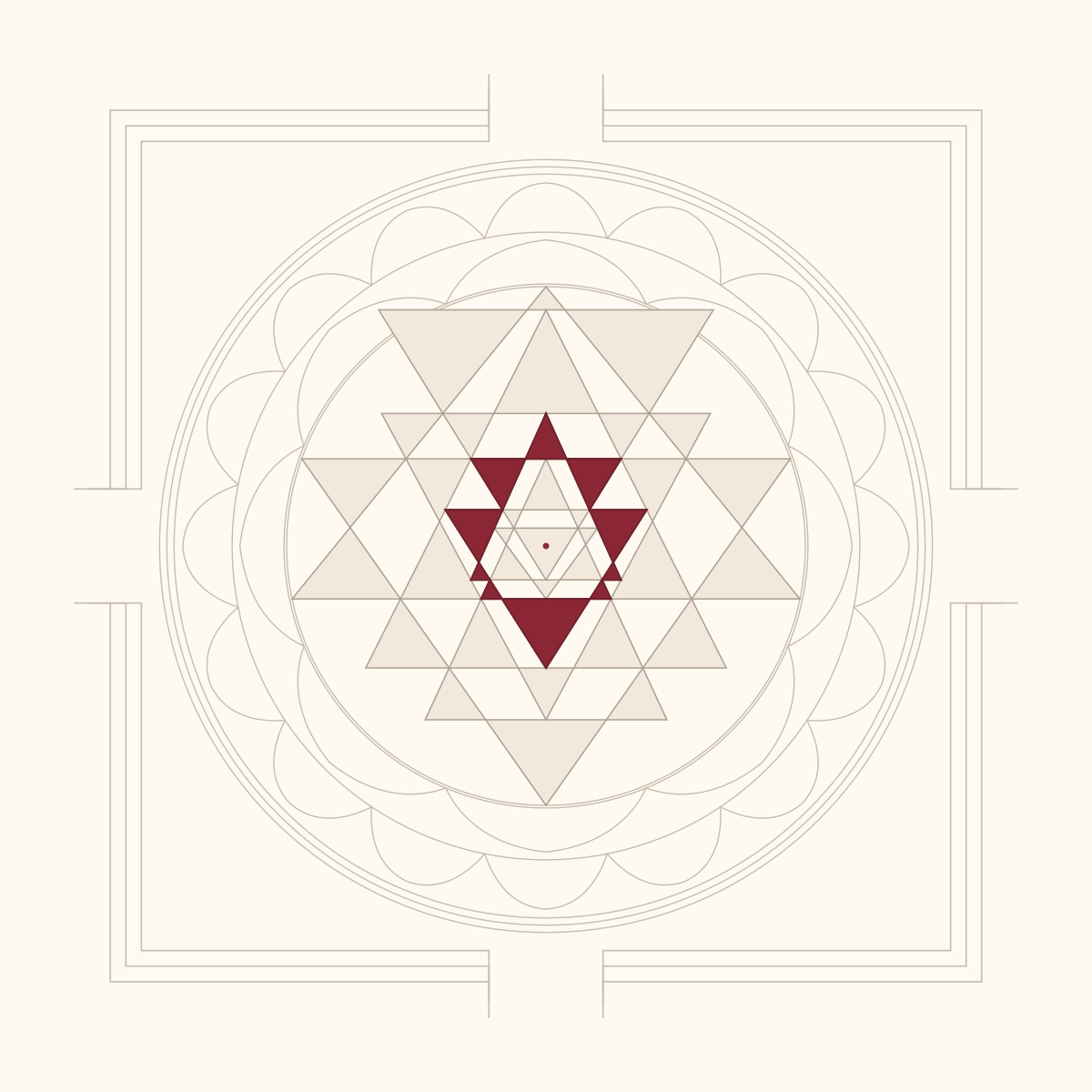
Sarva Rakshakara Chakra
The Protector. Associated with the protective aspect of the Divine Mother and the preservation of spiritual focus.
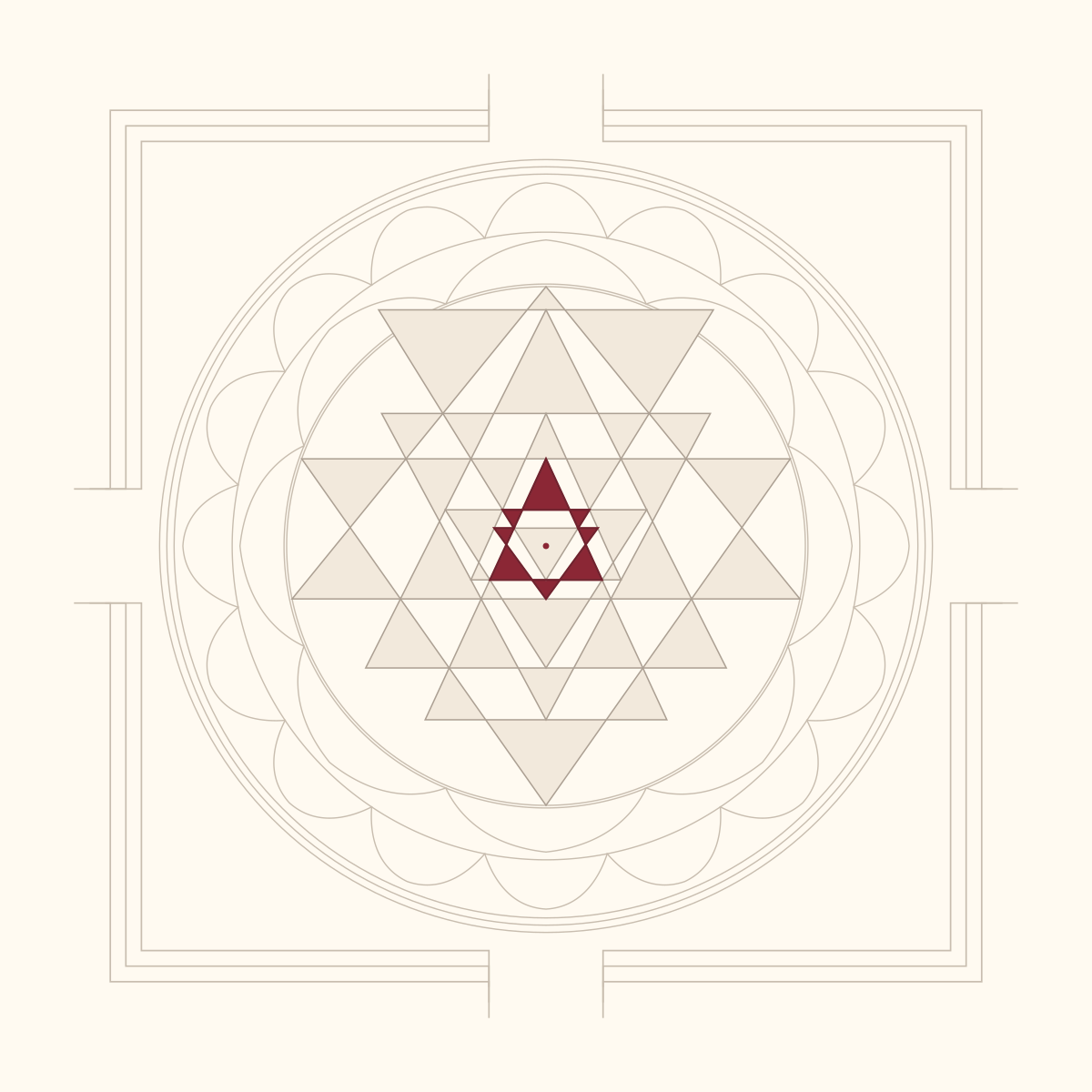
Sarva Roga Hara Chakra
The Remover of Afflictions. A traditional spiritual symbol of transformation and the aspiration towards well-being; not a medical treatment claim.
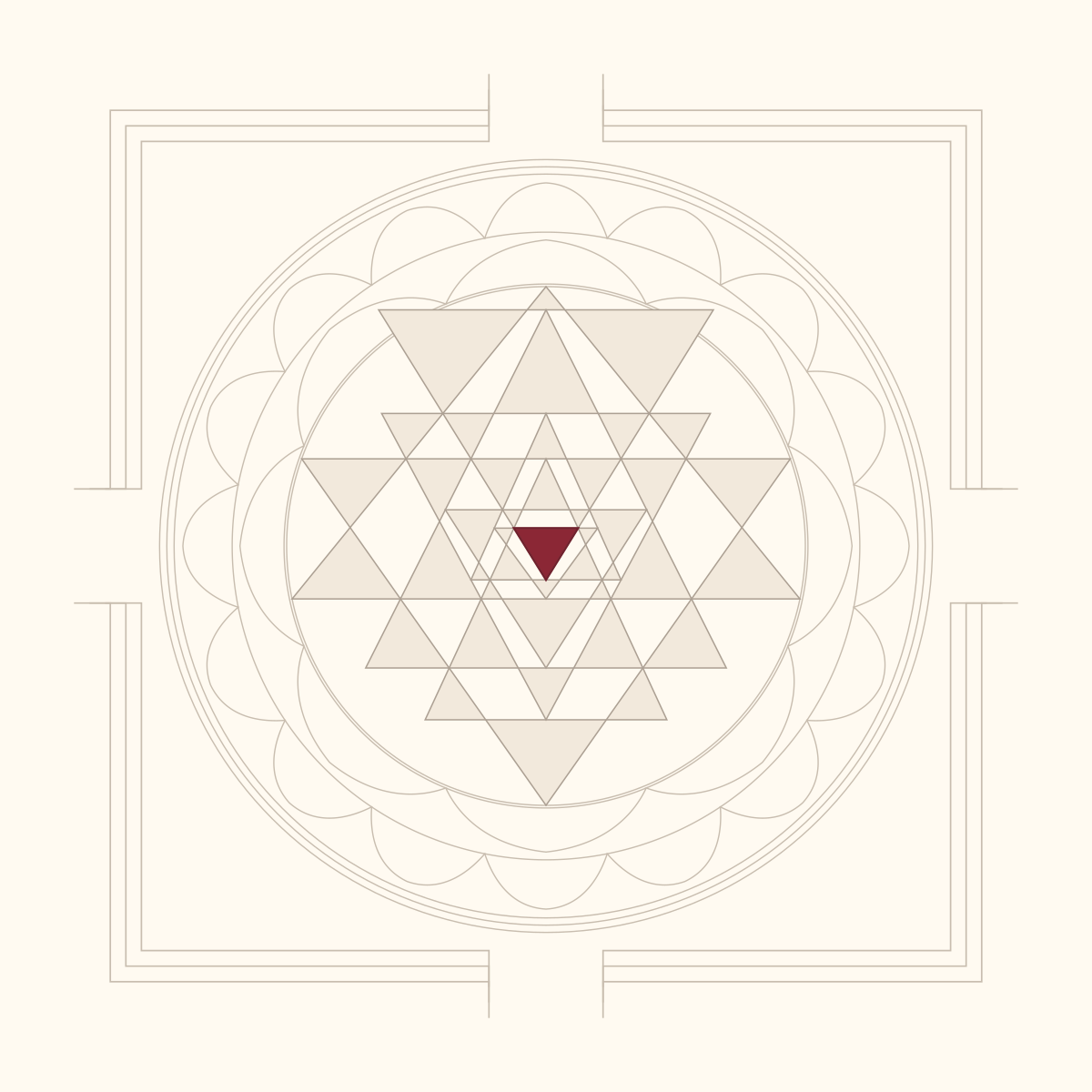
Sarva Siddhiprada Chakra
The Bestower of Attainments. The supplied notes connect this enclosure with spiritual progress and the idea of accomplishment.
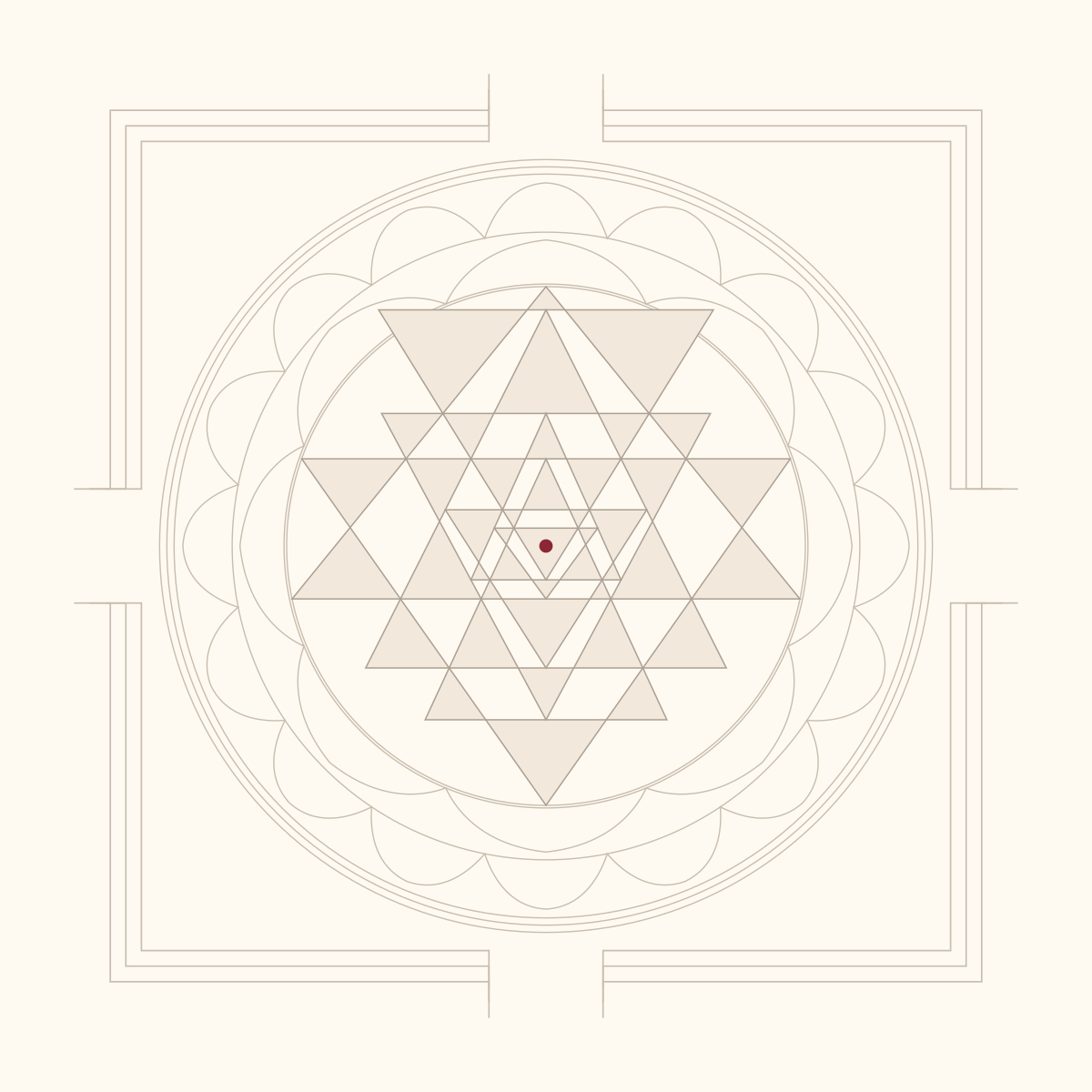
Sarvanandamaya Chakra
The Embodiment of Bliss. The central Bindu is traditionally contemplated as a symbol of unity, supreme awareness, and bliss.
Traditional Sri Chakra Correspondences
The following ideas are presented as traditional correspondences described in the supplied Sri Vidya study material.
Navagraha & Nakshatra
The notes associate the concepts of Bindu, Nada, and Kuta with the nine planets and the twenty-seven Nakshatras.
The Sixty-Four Yoginis
The supplied notes describe a symbolic relationship between the mantra structure, the three Kutas, and the sixty-four Yoginis.
The Twelve Rashis
The study notes associate a symbolic grouping of powers and geometric elements with the twelve zodiac signs.
Sri Vidya & Gayatri
The notes describe a relationship between the Sri Vidya mantra and Gayatri. The precise interpretation should be presented according to the relevant lineage.
Study Sri Vidya with Structured Guidance
Sri Vidya includes sacred geometry, mantra traditions, ritual worship, meditation, and philosophical study. Their interpretation and practice are preserved through different lineages and levels of instruction.
Learners should understand the terminology and context of a practice before moving into advanced material. Initiatory practices should be approached under appropriate guidance.
Discover Sri Vidya at Nikhil Vatika
Explore the available learning programmes and contact the centre to learn more about the tradition, courses, and guidance.